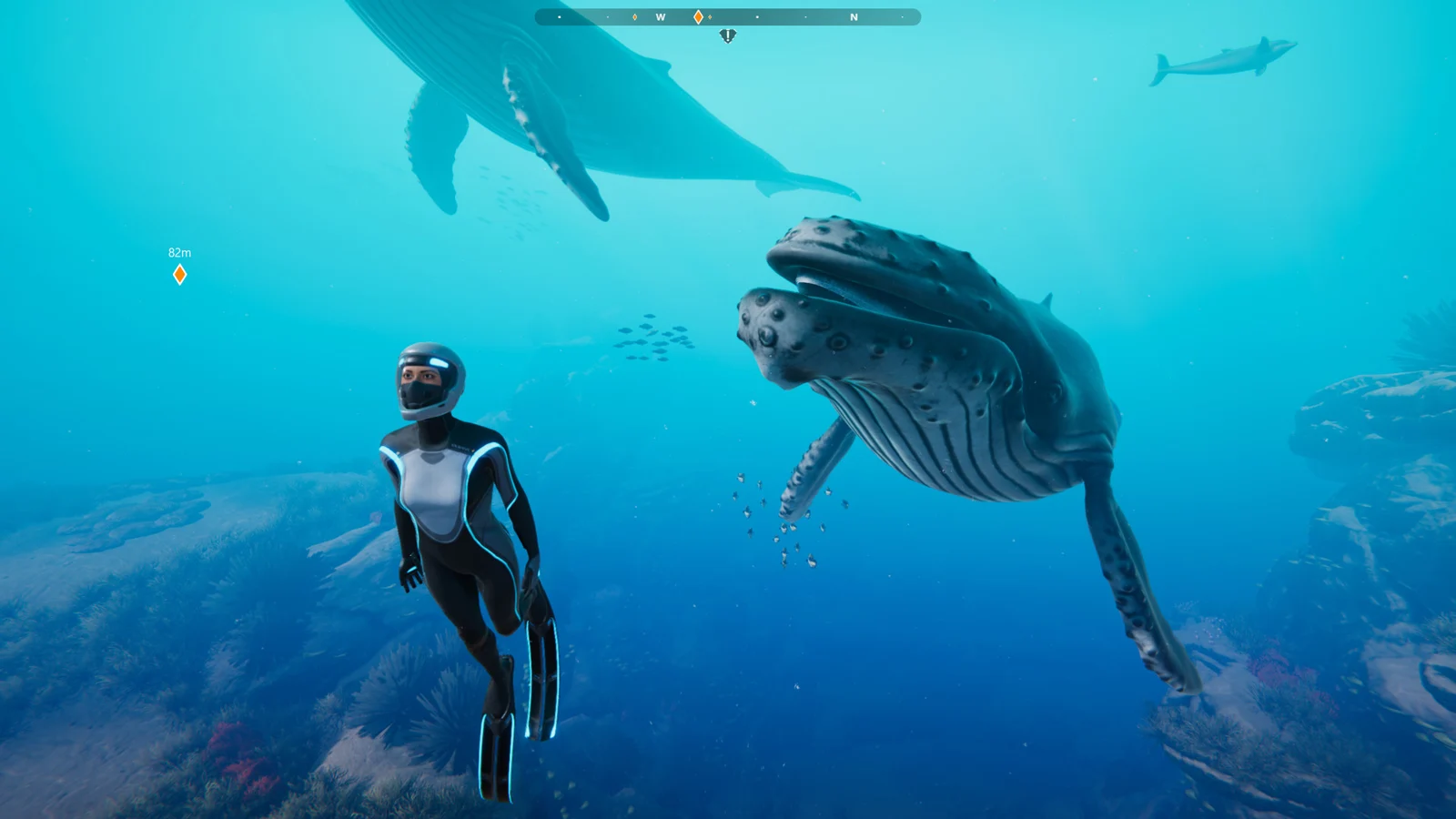
The visor has a purpose
Beyond Blue puts you in Mirai's role as an ocean researcher, so identifying an animal is an interaction rather than a fishing reward. During the main adventure, use the Scan Visor and the prompts associated with the current dive. Keep the creature inside the indicated area until the scan completes; merely swimming close to it is not the same as finishing that interaction. A promising photograph and a completed scan answer two different needs.
Approach along the animal's movement
An animal travelling across the view is harder to follow if you repeatedly swim straight at its last position. First watch its direction, then move alongside at a manageable distance. This is an editorial observation exercise, not a scripted trick for changing animal behaviour. The useful comparison is between following a subject and chasing its previous location. Keeping the surrounding water in view also makes it easier to recognise when the subject has turned or moved behind scenery.
Use the objective as a route anchor
A marked task gives the dive a destination, but there is no need to treat the space between markers as empty corridor. On the way, note a recognisable formation or a group of animals. Complete the necessary interaction before spending a long time framing a shot, so that you do not later discover that a scene you admired still needs its research action. Objective progress is communicated by the game; a personal note cannot substitute for its completion feedback.
A useful first observation page
For an illustrative research page, record the species name displayed by the game, whether the scan completed and a plain description of the encounter. Add a separate visual note such as 'the animal crossed in front of the rock silhouette'. This creates a practical bridge from identification to photography. Avoid adding precise biological claims solely because a game animation appeared to suggest them. The result is a readable record of what the game showed and what you chose to notice.